Sometimes when I am in the middle of painting a watercolor, a voice inside nudges me to take a photo midway through. Perhaps I have hit a place of hesitation, and I want a record of what it looked like “before I ruined it.” Often, though, it’s because I know I will want to show the painting’s many stages to my watercolorist friends when next we meet. Those friends fall into three groups:
1: the members of my Tuesday in-person watercolor group,
2: the future readers of the book I’m working on right now, or
3: I could share it with you here in a blog post on my website.
The good news? When I’m feeling exceptionally eager, it ends up here. Instant gratification!
Studying watercolor with a purpose in mind
Lately, I’ve been learning how accomplished artists synthesize multiple photographs to inspire a fresh composition, rather than letting the photo dictate the subject.
Level 1- Many beginners will grab a photo they saw online, then slavishly try to recreate every detail accurately using their still-developing skills in both drawing and painting. My feeling is, “Great! Whatever keeps you inspired to keep drawing those miles of lines and splashing in that colored water, it’s all good.” If you use someone else’s photo, be sure to write the photographer’s name in your sketchbook by your drawing so you can give photo-credit when you show your sketch to anyone. (Of course, making money from a sketch you did from a borrowed/stolen photo is a serious no-no, but I know you know that, right?)
Level 2- When you’re ready to move forward, you yourself need to become the photographer. Even so, you might mistakenly continue trying to recreate it exactly, with as few changes as possible. When your painted sketch is finished, it might still feel like something is amiss, even though you started with a stunning photo you took yourself. (Isn’t it funny how we can know that a composition is weak, long before we can identify exactly what the problem is?)
Level 3- The third and most delicious phase is when we see our own photos as mere launching pads that will inspire and lead us into the unknown. Distilling the good parts from several photos, then creating a brand-new scene influenced by your highly skilled imagination, can be the height of creative bliss.
But how on earth do I learn all those design skills quickly?
Glad you asked. Ron Ranson, a brilliant teacher, comes to the rescue, showing you the eight essential principles of visual design. Reading them takes little time; integrating them into your inner toolkit may take the rest of your painting life, but the benefits of beginning now will show at once. These principles are explained and illustrated beautifully in his book, Watercolor Painting from Photographs.
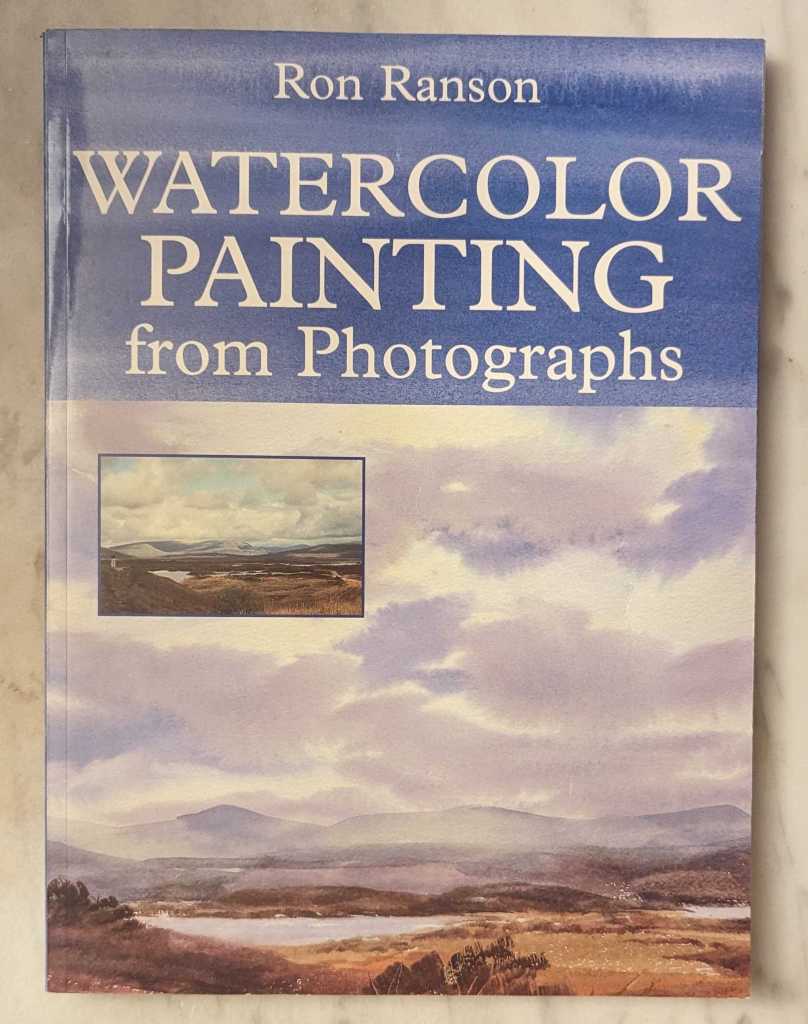
I believe it will soon become one of your most valued art reference books.
Here are a series of images from my recent alchemy journey:

I looked at each photo and asked myself, “What element captures my attention?” (That’s my “Draw What Drew Ya” Principle I speak of so often.) I decided I wanted wetland waters in the center foreground of the composition, with meanders in the middle, vanishing into a deep pine forest in the background. I got this far (see below) in my local meet-up group, then I was wise enough to stop because I lost momentum.
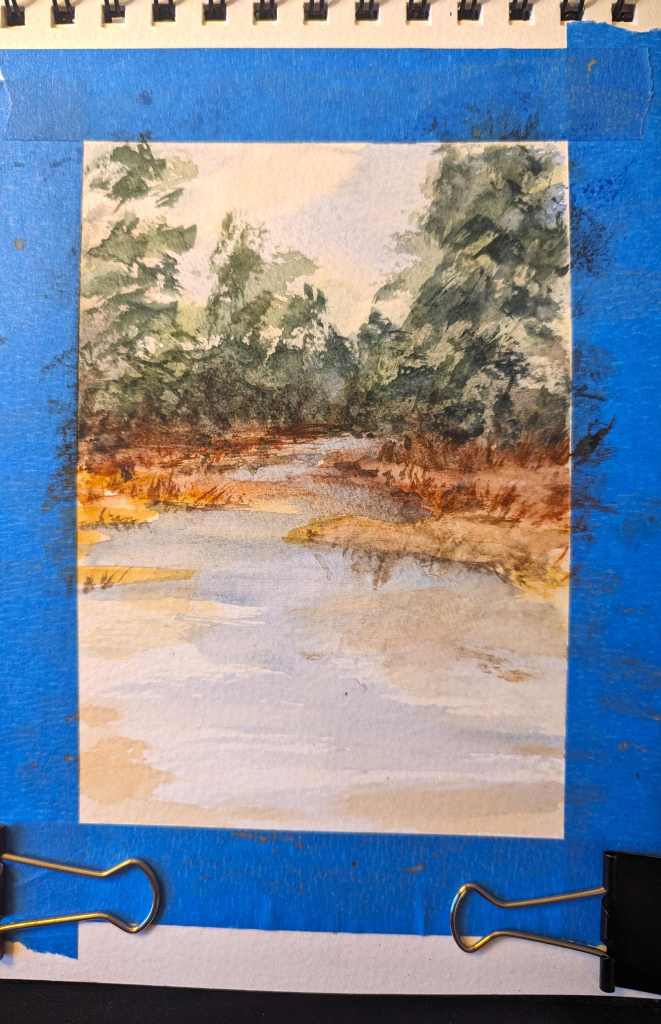
I set it aside for a day or two. When I went back to it, I thought I knew how to finish it, but I wanted to be sure. Answer? Head to the bathroom! Yes, I held the sketch up to the mirror and it was immediately obvious where the weak areas were. (No photo of the bathroom mirror, though. It’s hard for me to juggle a book and a phone camera at the same time.)
Still not sure, I pulled out a large piece of tracing paper, laid it on top of the painting, and added in some quick pencil lines on the tracing paper to “test-drive” my idea.
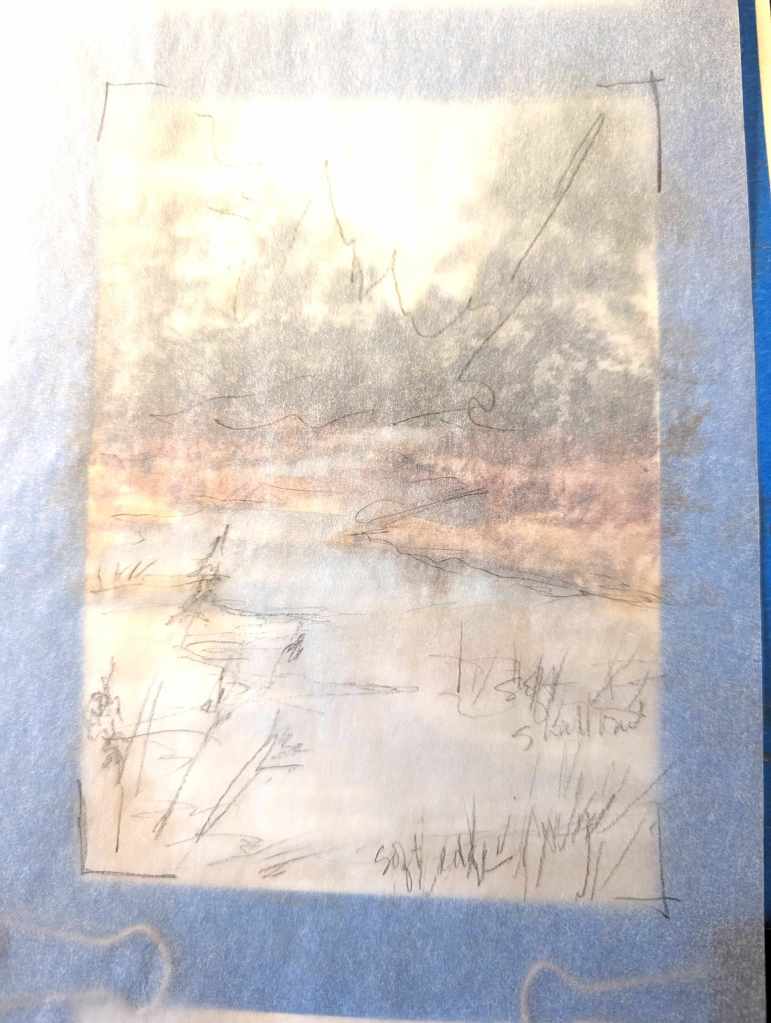
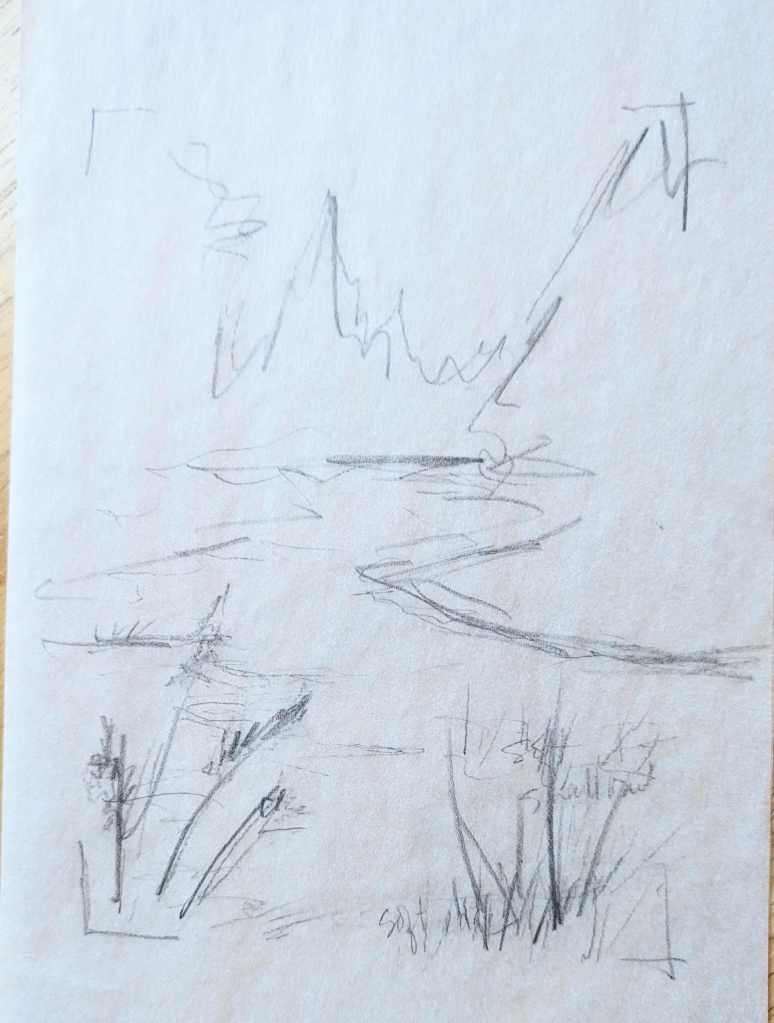
I thought I’d have it finished in no time, but I got carried away and added more definition to the lower right side than I had originally intended.
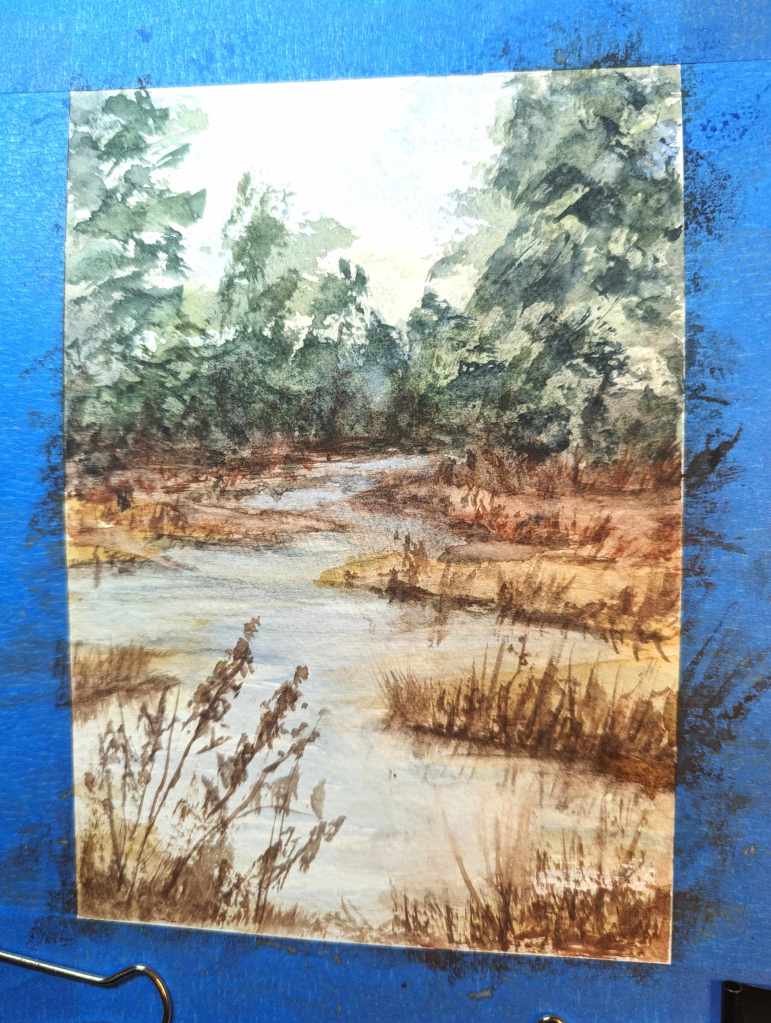
The few grassy reeds poking up through the water/ice became a solid peninsula, and suddenly the waterway looked more like an obstacle course than a gentle wetland. What to do?
Back to the bathroom, of course.
When I held the painting up to the mirror, it became very clear that I needed to do some excavation work and remove the entire lower right peninsula. It’s no coincidence that the colors I use most of the time are transparent non-staining ones. By staying loyal to one brand (Winsor & Newton) and a fairly limited palette, I have gotten to know not only how to mix the precise colors I want but also their chemical makeup and how they will behave. With very little effort, I lifted the offending peninsula, and added a few foreground grasses to invite the viewers’ eye into the picture plane, the design itself guiding the viewer through and around.
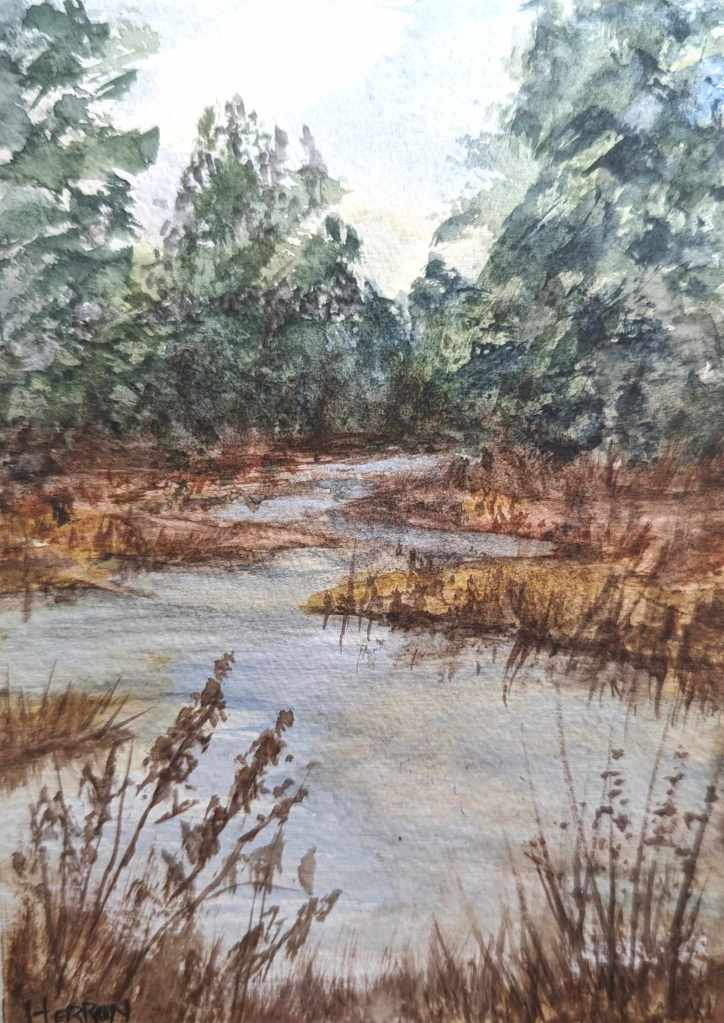
I’m satisfied with the resulting painting of a place that almost exists in real life. Almost. Anyone driving by that wetland would recognize the area immediately, but they will never find the spot where I saw that view because it simply doesn’t exist.
Except now it does. Right here.
*******
Feel free to forward this post to anyone you think might enjoy it.
If you find these posts valuable, please consider making a contribution of any size to The Tip Jar. It is a secure site, it helps keep this website solvent, and is greatly appreciated!
Questions? Comments? Public comments can be posted below.
Private questions or comments will reach me by using the Contact link here.
And, as always, thanks for spending some time “aloft”!

 Aloft with Inspiration
You are such a good teacher! This blog post is a great example of your ability to break down a process, as well as your ability to assess your work and make improvements. Enjoyed seeing how you do what you do.
LikeLiked by 1 person