My parents were city kids, but when Dad turned fifty, he decided it was high time to become a gentleman farmer. He’d never had a speck of dirt under his fingernails, but no worries; he had two young kids who, with a little training, could pass for farmhands on our five-acre fiefdom sixty miles north of New York City.
That spring, Fred launched the Gentleman Farmer Experiment by leasing out the small fenced-off pasture to a local farmer who had a heifer that needed grazing space. David and I would often race home after school, throw our books in the house, then run outside to see what that big, beautiful animal was doing. That autumn, on a school day, a trailer came and took away Harry the Heifer. At dinner that night, Dad said, “It was time.” We knew better than to ask.
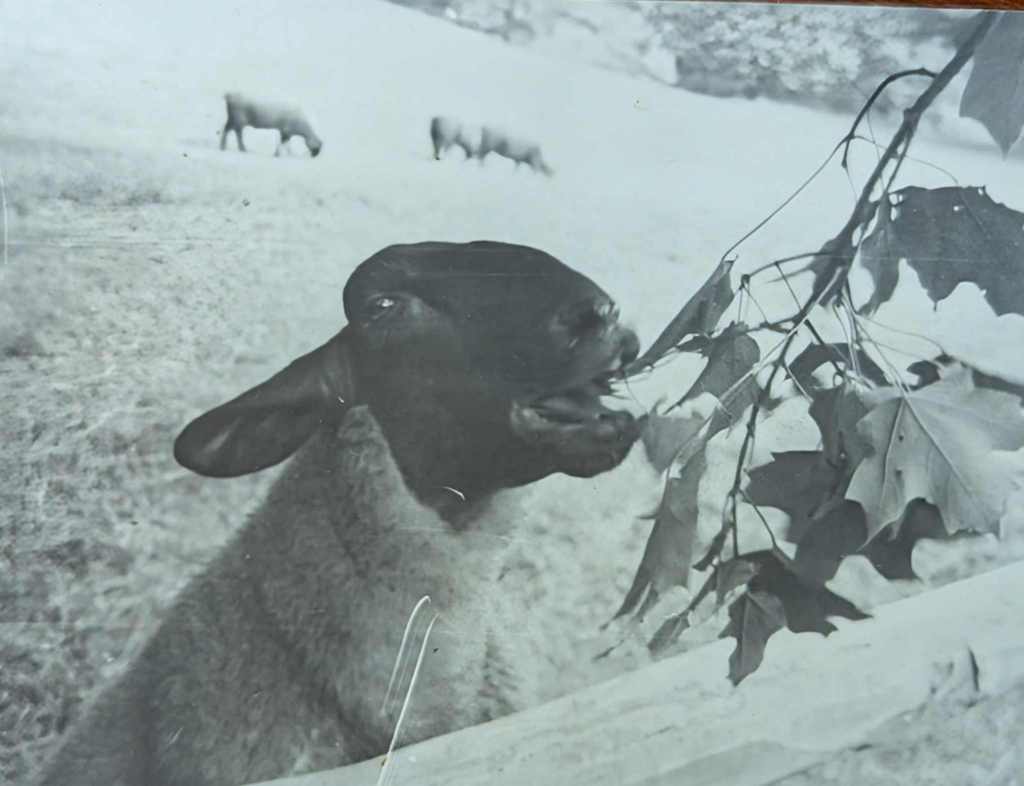
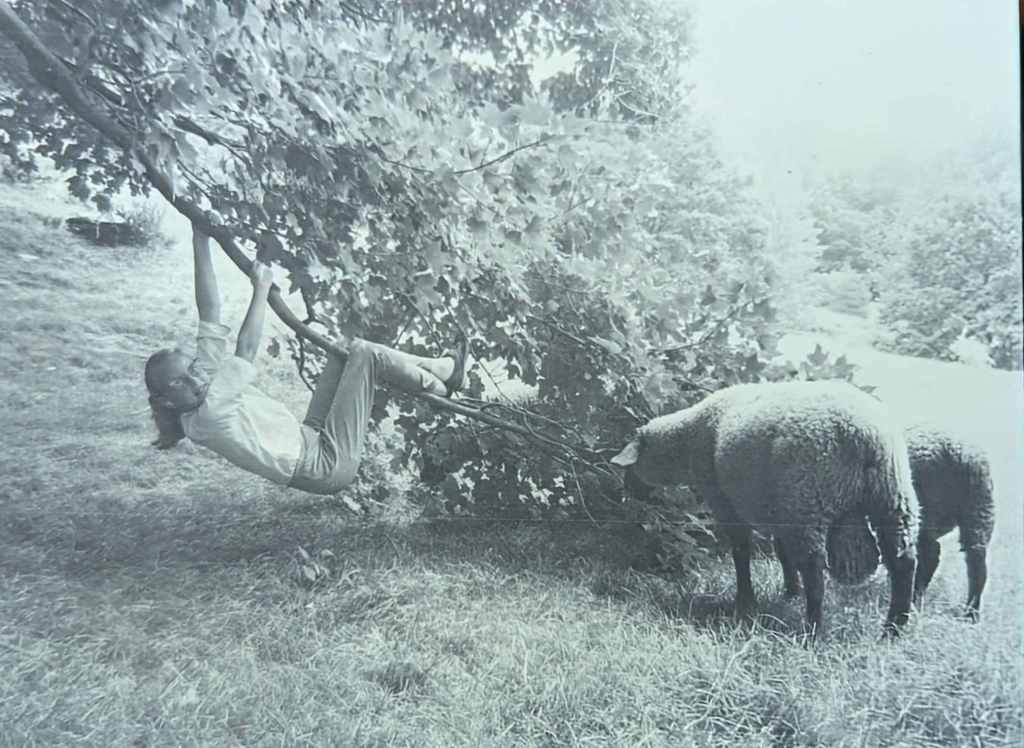
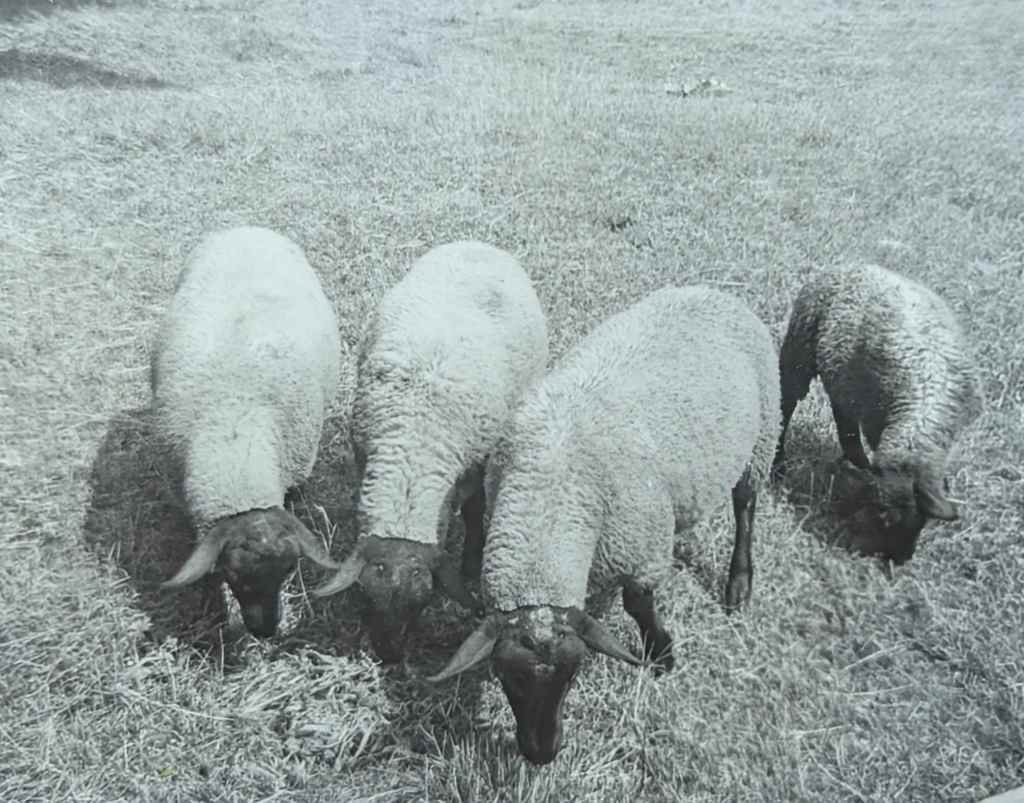
The following spring, it was time for another Experiment so Dad ordered up six cute little lambs who instantly became our responsibility. Each morning before school, David and I took turns letting them out of the barn to graze in the pasture, refilling the galvanized water tub, and feeding them their morning ration of grain. After school we headed to the pasture, rattling some crunchy grain in a metal bucket, trying to out-run all the sheep as they charged into the barn, leaping over the three-inch-tall doorsill as if it were a Grand National fence. The ram-lamb was especially scary, solid muscle, and full of aggression. His head-butting terrified both of us kids, so he was given the not-quite-affectionate name of Buttermilk.
That same year, Dad thought adding chickens to the mix was a great idea, so he hired a man to build a basic timber-and-chicken-wire coop at the far end of the pasture. Soon the laying hens took up residence in the pristine new coop, and a second smaller bird shelter was built near the patio off the kitchen, to house a batch of colorful bantams.
One day, Mom was standing at the kitchen sink, looking out the south-facing window, admiring the bantam chickens as they strutted and scratched around the back garden terrace. Knowing slaughter time was fast approaching, she mused aloud, “I’m sure gonna miss those chickens,” unaware that David was nearby. Without missing a beat, David said, “Where ya going, Ma?”
By the end of the second year, my brother had created a secret nickname for Dad. David, a smart-alecky ten-year-old, referred to Dad as “Good Ol’ Number 3” because whenever Dad said the three of us had some chores to do, that meant the two kids did the chores and Dad would supervise. Good Ol’ Number 3.
By year three, Fred’s hobby had become the buzz at his fancy corporate workplace, so he decided he needed to up his game and invest in something a bit more exotic than sheep and chickens, with an even better return on investment. That’s when he got the bright idea of raising pheasants. Yes, wild pheasants, but somehow domesticated. How hard could it be, right?
The chicken coop in the back pasture was still empty from the previous season. It just needed to be gentrified to create a larger, taller home for the new exotic residents. Pheasants are much better aviators than chickens are, so the wire mesh sidewalls had to be raised up to ten feet, and the top of the coop covered with mesh to prevent any escapes. It seemed like a good idea at the time.
There was only one problem. Frightened wild animals will do anything to get away from humans. Wire be damned, they flew, and many crashed. Once again, the chore of feeding and watering the new arrivals fell to David and Bobbie, with the additional admonition of, “…and Don’t Scare Them!”
We took turns and over time became proficient masters of stealth. From the moment we passed through the fence gate that separated the lawn from the stubbly pasture, we began creeping as slowly as possible, eyes downcast, furtively choosing the path of least trauma toward these poor wild captives. The birds always panicked, even though we were bringing them food and water. A few beautiful birds broke their necks on the chicken wire as they attempted to fly away.
How could the two of us kids solve this problem? I decided to start humming as I passed through the fence gate. Then, I would slowly turn around at the coop door, still humming, open the latch behind me as I stepped backwards over the barn board threshold and into the pen. My Pavlovian aspirations were clear: if the pheasants could just hear my voice, maybe eventually they would know food was coming. I looked at the ground and kept my back to the birds the entire time. There was no chance of eye-contact, something we all know is the scariest part of any relationship, human or foul.
Pouring the grain into the feeding trough was the easy part. That evil galvanized water feeder was another story altogether.
(To be continued…)
~~~~
I hope you enjoyed this essay from my series called “In the Meantime,” a collection of stories about memorable odd moments in life. Feel free to forward this or any post to friends and family who might enjoy them.
Click on the “Word Cloud” on the right if you’d like to read more about a specific topic.
All three of my books are available on Amazon in eBook and paperback formats. The newest book, Look at That! – Second Edition, is also available as a beautiful hardcover.
A big thank you to the recent donors to the Tip Jar. If you find these posts valuable, I hope you will contribute to The Tip Jar. It is my preferred alternative to having this be a subscription website. The Tip Jar is a secure site, and it helps keep this website solvent.
I would love to hear from you! The public “Leave a Comment” box is shown below. Private questions or comments will reach me by using the Contact link here.

 Aloft with Inspiration